By Denize Springer
Remember?
I was alone with you in your kitchen. You were rolling dough, and the flour flew around us like the snow making circles in the wind outside. We were both looking forward to my third birthday and counting down the days.
As usual, I stood by your side, one chubby hand gripping your apron as I sucked the thumb of my other. I rested my head against one of your pillowy hips. I could hardly see over the table, but like most days I was content to just enjoy your company, occasionally looking up to get you to smile.
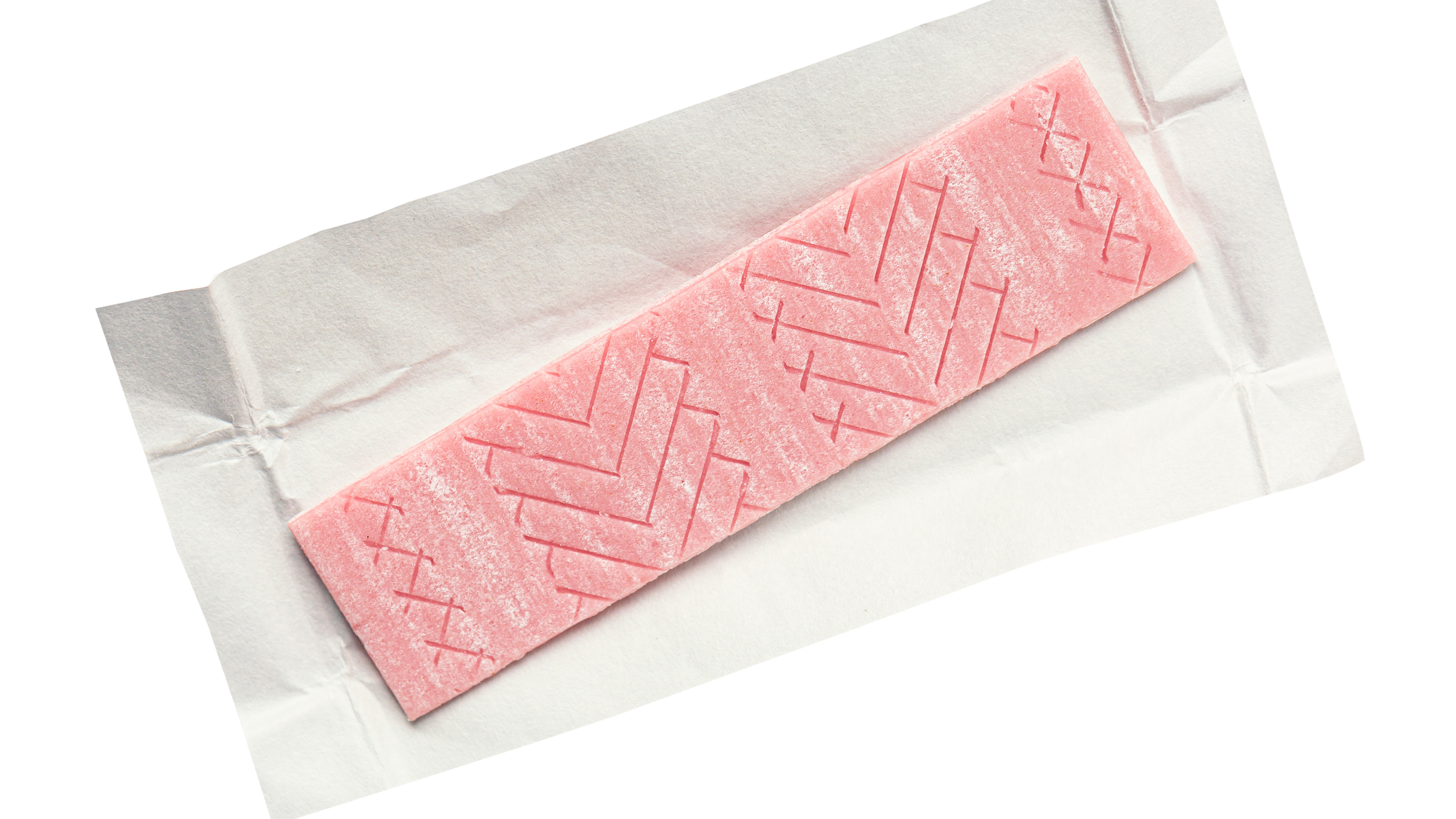
Beads of sweat formed on your forehead and ran down your cheeks. You swiped them away with your sleeve, then reached into your pocket. Your apron pockets were always a wonder to me. Something good always came out of them and, sure enough, out came two sticks of Dentyne gum. You unwrapped both and put one in your mouth. I looked up at you and waited. You smiled.
“Okay, but you can’t swallow it this time,” you said sternly. “Gum is for chewing only.” You gripped my chin in a flour-dusted hand and opened my mouth. “Promise?”
I hadn’t even the time to nod before you suddenly dropped the gum and your rolling pin and flew back against the wall with such force that vomit and blood seemed to explode out of your mouth. You slid to the floor and came to rest on your behind. Your head drooped over one shoulder. Your legs were spread open, and your dress and apron were hiked above the garters of your girdle.
“Gramma?”
Your eyes were slightly open, but you didn’t look up. I got down on my hands and knees and tried to look into them, but they seemed to be focused on the floor. I rolled my head upside down on the linoleum, trying in vain to see up into them.
“Gramma?” I shook your shoulder. “Gramma, wake up!”
My cries drew Cousin Pam into the kitchen. She was old enough to know how to phone her mother at work. When she hung up, she looked at me and said, “We got to stay with Gramma until the ambulance comes.”
You stayed asleep. You didn’t even wake up when the two men picked you up by your arms and legs and put you on a rolling bed. Then they buckled straps around you.
“So she won’t fall off,” one of the men said with a wink.
I watched from the outer hallway stairs—on the one with the drop of white paint on it. Remember? It was called “two” whenever we were counting steps.
Pam followed the men as they wheeled you out of your house and into the back of a big red car. I stopped at the door. It was snowing harder now. But I could still see the car go to the end of the block where it paused at the stop sign. Then you disappeared behind a curtain of snow.
I had no idea it would be forever.
Everyone at that time thought me too young to attend the funeral or wake, much less understand any explanation of death. Instead, I shared Mom’s utter devastation for the next few months. Every day she’d come home from work, go to her bedroom, shut the door and cry herself to sleep. I kept vigil outside the door until Dad came and took me by the hand.
“Come on,” he’d say, “let’s get our supper.”
“Why is Mommy crying?”
“She’s sad.”
I began to wonder if “sad” was what would happen to me. Worse, I began to feel that what happened on that February morning was somehow my fault. After all, I had been right next to you when a very bad thing happened.
As I grew older, the empty, scary feeling that had haunted me since the day of your death got even worse every time Mom and Dad left the house. Whenever they dropped us kids off at birthday parties, even visits with Santa, I always felt sad and sick to my stomach. I was six or seven when Dad dropped Jimmy and me off at a movie theater to see a kids’ matinee.
It may have been the first time I had been to a movie theater. I loved the velvet seats, and the smell of popcorn was warm and comforting. For a while, I luxuriated in a new, brighter world that wasn’t colored by Mom’s sadness or my usual anxiety. As I focused on Bambi and his mother in the forest, I was reminded of the lessons I’d learned at your side: bees were not something to try to catch, and, more importantly, there were places I should never go.
When Bambi ran into an open meadow, his mother ran after him, and as soon as I heard that hunter’s shot, I’m sure I was the first kid in that theater to realize that Bambi would never see his mother alive again. I howled with grief, even though I was too young to know why. All the little Disney animals led Bambi away from his dead mother while an usher escorted my bewildered older brother and me up the aisle and out of the theater.
It started to rain. Jimmy tried to cover his head with his Cracker Jack box.
“What’s the matter with you?” he demanded. “Now we’ll have to wait out here until Dad comes back.”
“I don’t know,” I said. And I wouldn’t for a long, long time.
The Bambi incident prompted a visit to Reverend Hemsley. He was a big man, and all his talk of an Almighty God and that place, heaven, where, he assured me, I might one day be reunited with you, was confusing. Worse was his insistence that I must say my prayers every night.
“Tell me what you say to the Heavenly Father before you go to bed.”
“…and if I should die before I wake, I pray to God my soul to take…”
What? To where?
Sure, I wanted to see you again, but I wanted to know more before I went there.
Staring out at the clouds on my first airplane ride, I was astonished to find that we could just fly through them. Close up, clouds were nothing more than a grayish vapor that could never support the angels I’d seen on Christmas cards and stained-glass windows, much less anyone’s stout grandmother. Later, the space missions convinced me that heaven had nothing to do with “the heavens.”
Death, I eventually had to conclude, was irrefutable and irreversible. Worst of all, you might not see it coming. While I began to think I would never see you again, I had no idea that the absence of someone I lost at such an early age would linger, and in such a weirdly useful way.
I was drawn to the woman next door, who was about your age. But Mom forbade me to go to her house or even join her in her garden. Later I learned that her husband had sexually abused their daughter, who was then removed from their home. Still, when all my young friends were roller-skating or riding their bikes, I rarely joined them. I preferred to watch her go about her day from the safety of my back porch.
By the time I was in grade school, I had grown to prefer the company of older adults. My close childhood friends were few. In fact, older strangers dominated my daydreams. At recess I was fascinated with an old man who ate his lunch at his kitchen window, which faced the schoolyard.
How old is he, I wondered. Does he live alone? How soon will it be before I never see him again?
When I was old enough to appear in school plays, I wrapped myself in the warmth of old women characters, or any women I perceived as old. By the time I reached twelve, I had played a grieving Mary Todd Lincoln twice.
“Wasn’t she wonderful?” My classmates’ mothers and grandmothers marveled at how convincing my grief was.
I began to crave such remarks. It hadn’t yet occurred to me that I was still grieving or even knew what grief was.
Puberty ensured that I could always “play old” and might never, ever earn a role more consistent with my age. I developed breasts before any of my classmates and maintained a layer of fat around my hips no matter how much I dieted. In high school I earned several leading roles that were all older characters, but in college my willingness to play older characters finally began to fray.
In my senior year, I desperately wanted the role of one of the three sisters in the Chekhov play. I studied each and did well at the audition, only to be disappointed when I saw the cast list. My name appeared at the bottom, next to the character Anfisa, an old house servant.
I was furious, and jealous of the classmates who earned the roles for which I had worked so hard. My impulse was to quit in a fury, but I didn’t. By then I revered the Stanislavsky adage, “There are no small roles, only small actors.” I swallowed my disappointment and threw myself into the task of playing this old, grandmotherly woman.
I learned Anfisa’s lines quickly but faced each rehearsal with dread. Though it was spring, I never felt darker. All old people seemed sad to me. Perhaps it was because they were soon to die. I began to hope that my mood would be enough to carry me in the role throughout the run of the play.
Mournfully, I watched from the wings as my classmates in the leads went through their paces. I spent more time imagining how I would play those roles than I did on my own character. When the costume designs were revealed, each of the sisters had at least one elegant dress of the period.
My costume started with a fat suit. This only hurt more because, at that time, I was thin for a change. Over that went a burlap skirt, a stained apron, and an old blouse with just a little lace around the high collar. A scratchy, gray wig topped off my misery.
On my spring break visit home, I resumed my obsession with the woman next door. She was now in her eighties and her husband long gone. She eagerly welcomed my company and my help in her garden. We spent most of a sunny Saturday afternoon preparing a big pot of stuffed cabbage.
She had a proud goose-like walk and her large midsection somehow balanced over skinny legs and small, wide feet. Whenever she couldn’t find her kitchen towel, she’d shake whatever was on her hands all over her kitchen. The walls attested to years of this. She had a funny way of ordering me around. If both of her hands were occupied, she shoved me away with her enormous, soft hips.
By the time I returned to rehearsals, Anfisa was in my bones. I could still smell that cabbage cooking each time I donned the fat suit and penciled in Anfisa’s wrinkles.
My portrayal received nothing but encouragement from the director. Whenever I asked about something I’d done, he nodded and said the same thing, “Fine, very good!” I wanted more from him, but he seemed totally immersed in coaxing better performances from the leads.
On my way to our technical dress rehearsal, I stopped at a campus store to buy a snack. It would be a long night with stops for adjustments in lighting. Just as I was paying for my yogurt, something familiar caught my eye: the red-and-white wrapper of a pack of Dentyne. It wasn’t sugarless, but I bought it anyway.
I put the pack in my makeup kit and glanced at it from time to time while covering my face with Anfisa’s makeup. Just as I was leaving the dressing room, I snatched it up and dropped it into her apron pocket.
During a scene that involved the whole cast, we had to stop and stand still while technicians adjusted the lighting. I put my hands in the apron pockets and fingered the unopened pack. Moments later, I opened it and took out a stick. The pungent cinnamon aroma tickled my nasal hairs as I inhaled it deeply. When the action resumed, I returned the gum to Anfisa’s apron pocket.
I carried this cultural anachronism throughout the run of the play. I had enough time between entrances and exits to actually chew a piece and often did. When it was time to go back on stage, I took it out of my mouth and stuck it to the wooden supports of the set, where its scent and meaning remained unnoticed by anyone else. I no longer perceived Anfisa as a role. She had now become part of my life.
Nonetheless, by the last performance, I was happy to finally hang up the fat suit. The ratty peasant blouse reeked under both armpits. I took off the wig and put the last stick of Dentyne in my mouth, chewing it as I cold-creamed the greasepaint from my face.
Just then an older stranger, whom I later learned was the grandparent of one of the actresses playing our three sisters, stepped into the dressing room. I didn’t turn around. Instead, I let my reflection in the mirror acknowledge him with a nod. He stood behind me, his hands in his pockets, his head tilted to one side.
“Hey, you really seemed to belong in that place,” he said, “just like that silver samovar on the table. My grandmother had one just like it.”
What the hell did that mean?
I nodded to him without turning around and continued to wipe the old woman off my face for the last time.
“Every moment,” he added, smiling and raising his arms above his head. “So vivid. I won’t forget it.” I nodded again without turning around.
God! Was he hitting on me?
I skipped the cast party and was halfway across the campus quad when it dawned on me that the man had said something most actors don’t hear enough. And, however ambivalent I was about “playing old,” I had managed to reveal something hidden and true in a character who was nothing like the person I was at twenty-one.
I am now well past the age you were when you left. Although the hope that I would someday finally get to say goodbye has faded with reason, I still look for, and often find, you. Even if it is only in the kindness of a stranger.