By Elaine Gantz Wright
“My fear of data loss is illustrative of the process by which
experiences affect us without becoming memories –
becoming more a part of us than memories ever can.”
Elliot Wright (1992-2018) – “Life is Data Loss, a Tautology”
Even before the seismic fault fractured my life in two—the time before and the ever after, I struggled as a mother and human. The truth is, I almost can’t remember myself before, who I was, how it felt to be me. I just know I am one of those people I never thought I’d be—a mother who lost her son. It’s been a month since Elliot, twenty-six, flew off his motorcycle and over the side of a forty-foot-high entrance ramp onto the unforgiving ground below. I lose track of the days.
It’s like I’m flailing around inside one of those massive waves at the beach, the kind that takes you by surprise when you are minding your own business, oblivious to the ocean’s belligerent indifference. You’re just bouncing up and down in the shallow part, and then something snatches you from behind in a blind churn. Tumbling around in a salty washing machine, you pray you’ll find your way up to the light somehow. The problem with losing a child is that the wave never completely retreats. You will wait forever for its frothy edge to flow back into the sea over the hard-packed sand. You struggle to breathe, much less swim to shore.
It’s 10 am on a Tuesday; I think it’s Tuesday. My cup of dark roast coffee is my only certainty as I walk into my home office, the room that was Elliot’s when he lived here for about eighteen months after finishing his degree in Canada. He studied classical saxophone and pondered returning to Toronto at one point and even had an invitation from his generous poetry professor, Ricardo, to sleep on his couch. At the time, I did not want him to leave, but now I wonder if that choice would have kept him alive. I could not dwell there. Too many ifs.
The gravity of every decision is heavy now. What should I be doing? All I want to do is watch The British Baking Show as the days pile up into a gooey raspberry trifle. I am tired of people. No one understands. I cannot bear one more superficial exchange: “Oh Elaine, I am so sorry for your loss. Let me know if there is anything I can do.” I want to say, Damn it, bring my son back. That’s what you can do. But that’s not usually on the list, and by the way, there is nothing you can do.
I dread the looming executor’s duties, excavating Elliot’s digital footprint and bitcoin breadcrumbs—to erase his virtual presence too. How does a mother close her child’s estate? I feel like throwing up most of the time. Being so young, Elliot had no will. His frontal cortex was barely baked. This is not my first rodeo. After my mother’s first stroke, a transient ischemic attack, in 2008, I convinced my parents to update their wills, which had not seen the light of day since they married in 1958. They had no planning documents. My mother and father lived in that awkward space between judgment and denial until they died in 2012 and 2014, respectively.
Elliot’s situation is profoundly different. I don’t have the same sense of obligatory resolve I did with my parents. It had been a long goodbye. With Elliot, my incredulity is crippling, and on top of that, I have no idea how to break his codes or passwords. And who knows what I might find? I pick up Elliot’s phone from my desk. I feel his presence for a microsecond. Besides, he just might call. Thank God, his ex-girlfriend, Brenda, had his passcode, the last four digits of my Social Security number—another eerie connection. There is so much to uncover here, perhaps a clue or answer to what happened and why, like a key piece of police evidence in a horrific crime.
I click on his Google notes, and a file catches my eye—Life is Data Loss. I open it with as much trepidation as anticipation; my stomach is gurgling and constricting. So many digital pieces of Elliot to compile, looming like a hyper-encrypted fractal. He had a brilliant mind and insatiable curiosity. This passage sends chills down my spine:
“I am a data scrounger. That’s who I am . . . Files, thoughts, and texts spread across Google Docs, jump drives, home directories, virtual machines, shell accounts, and scraps of paper. The point is, we lose life in its happening, and we are left holding its threads like unearthed artifacts from a long-lost Chinese dynasty.”
Elliot, I am now your data scrounger, foraging for answers, connecting the dots between the ones and zeros. Everything feels so ominous and faded, like a distorted Twilight Zone-esque reality or nightmare from which I will never awaken. It’s a marathon, not a sprint.
My monkey mind keeps firing off scenarios like a rotating turret on the front lines. Is he living in a different life somewhere, some parallel universe, or a secret, prearranged location off the grid? If it’s not a dark-web cabal, it might be the CIA or NSA that hand-plucked him to save the world from a deep-state cybersecurity hack. He dabbled in Bitcoin as a teenager after it was first introduced, tossing around terms like Ethereum, blockchain, Satoshi Nakamoto, and cryptocurrency as if he were conversing in a different language. He was.
He even had a slight resemblance to Edward Snowden, the infamous NSA intelligence contractor/whistleblower. And then there’s the surgeon who said, “We’re sorry. He does not have
any organs worth donating,” after he supposedly died on the operating table at Presbyterian Hospital. His driver’s license said otherwise. It was the same place he took his first breath
Elaine, stop it!
But Elliot was an IT savant, leading his transaction management employer’s transition to the cloud. At twenty-six, he represented the company on an ultra-elite, uber-secret team at Google, the boy who taught himself to code. His boss, John, told me at the memorial service, “Elliot was our first cloud engineer. He was a genius—just figured it all out. I am not sure what we’ll do without him.”
Well, that makes two of us.
The last time I saw him, a week before the motorcycle incident, I picked him up at the airport after he returned from a week-long summit at Google. Oddly, he texted me from the sidewalk outside Dallas Love Field’s baggage claim: “I’m near the end, Mom. I hope you can find me.” It was one of the last texts I received from him.
*
I decided to take one of his impenetrable laptops to an ex-CIA agent-turned-computer guy. Micro Center, the local “geeks’” computer store, referred him for their most challenging encryption cases. I remember wandering through the waist-high grass to the garage behind a modest house in Richardson, a Dallas suburb.
“Come in,” Tom said. The room was ominously dark in the afternoon. It was illuminated by only the blue glow of about a dozen computer screens. Tom looked like a character in a spy movie with his crooked wire-rim glasses and damp, tousled red hair encircling a shiny balding dome. The room was stacked floor to ceiling with computer components, some buzzing and beeping in a dissonant concerto.
“Sit,” he said. “Let me look. Do you have the password?”
“No, that’s why I am here. It was my son’s. He was killed in a motorcycle accident. Micro Center thought you might be able to crack it.”
“Did he have an external code authenticator?” he asked, not making eye contact.
“I don’t know. There was an app that looked like one on his phone, but I could not get it to open.”
“I have a couple of gadgets I can try, but this looks pretty locked down. He knew what he was doing. Did he work for the Agency?”
“CIA? Uh, no.” His question took me by surprise.
Tom tried a few things with something he plugged in the USB port.
“Nope,” he announced. “There is no way to get in. It’s as if it’s been wiped or too deeply encrypted, beyond my expertise.” I hadn’t brought the two Apples because he spilled beer on one several times, and the other has a broken screen. I think the Bitcoin wallet was on one of those.”
“Above my pay grade,” he said.
“I’ve got to go. I can’t . . .” I ran out the door he had asked me to close.
I walk into the bathroom at home. Maybe I’ll take a shower; my eyes are puffy from crying in the car. It’s my favorite place to cry, perhaps because it’s just me in such a confined space and I feel closer to him. Standing in front of the mirror in my bathroom, I wail from my core into a mauve bath towel and blurt out,
“Where in the hell are you, Elliot? Please, please, tell me! Why did you have to ride that damn motorcycle?”
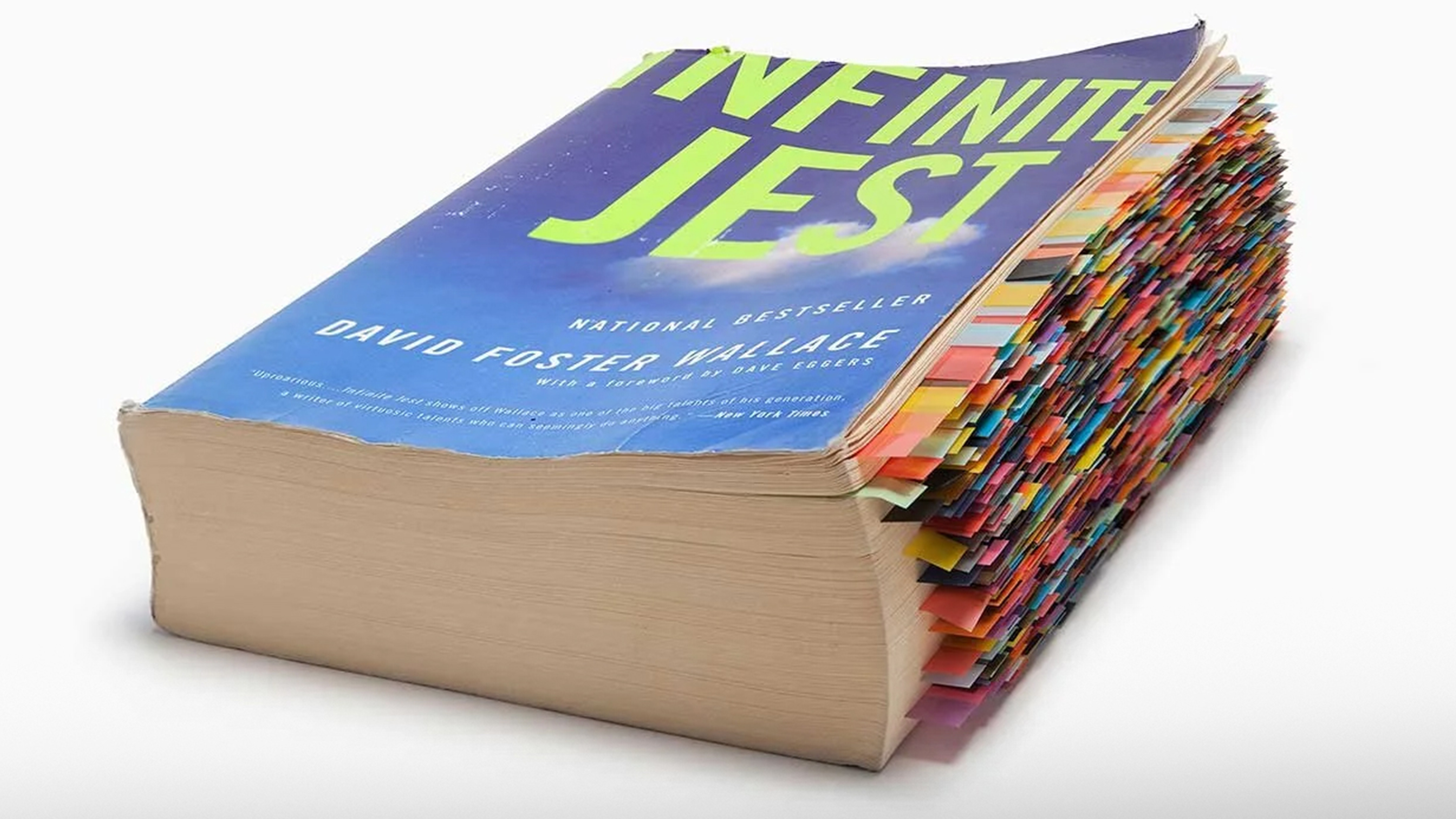
The radio distracts me from my grief-hijack moment. It’s NPR playing on my old-school boombox—Ask Me Another is playing. Ophira Eisenberg, the host of the show, asks, “What is a mash-up of the author of Infinite Jest and a Claymation rocket to the moon?”
I stop cold. Infinite Jest? You don’t often hear people talk about that book. And Claymation to the moon? Oh my God! Wallace and Gromit? The insightful guest and I said at the same time: David Foster Wallace and Gromit. That’s Elliot. He’s here.
Elliot watched Wallace and Gromit’s The Wrong Trousers endlessly, and he discovered Infinite Jest at about age seventeen, grappling with Wallace’s work with a love-hate zeal for the rest of his brief life. The random specificity of this synchronicity gave me goosebumps, as if Elliot had stepped in the room, but not this dimension. His intelligent mischief is unmistakable. I immediately texted Ian, his brother at Purdue. He loved Wallace and Gromit too.
“Guess what I just heard on NPR? A sign from Elliot. They asked for a mash-up of the author of Infinite Jest and a Claymation rocket to the moon. David Foster Wallace and Gromit.”
Ian was at school but texted, “I dunno Mom, but it’s pretty funny.”
Maybe I am losing my grip. Truth feels as ephemeral as a puff of smoke from my mom’s ultralong Max cigarette. I see them both in heaven, or do I? And my dad? I don’t know. Are they there together, chatting in some other dimension we can’t fathom, sitting on some heavenly couch? Maybe it’s time for another medium. I will add that to my list.
There’s a knock at the door. I jump out of my skin. Elliot!?
People don’t usually just drop by, fearing they might actually have to speak to me. In America, dropping off the covered dish and scurrying away is the preferred way to comfort the bereaved. It feels like you are doing something—which you are—but you don’t have to swim in that uneasiness of failing to find the right words. We are a “get over it and move on” culture. I didn’t really want to chat or eat anyway.
I look through the peephole. Oh, it’s Kimberly with lots of Central Market shopping bags. Do I want to be home? I can stay quiet. Well, she’s here. I should open the door. Kim is one of my most spiritually evolved friends, meditates daily. You know the type. We were not best friends but had been roommates at a Finding Peace through Meditation retreat I attended a year ago that was sponsored by a New Thought church called Unity. I visited there off and on for a couple of years while searching for a place to belong. I like it because it encourages a less dogma-driven, spiritual approach that finds divinity in humanity.
“Oh, my dear, sweet Elaine. I want to hug you,” she says as I open the door. She is wearing a loosely crocheted white poncho off the shoulder over her sleeveless tank. Her large, Jackie O sunglasses are nonchalantly placed on her head to hold back her long brown hair.
“Come in, dear friend.”
Kim is so warm, generous, and has an amazing mojo. I remember at the retreat last year she told me about losing her teenage nephew in a sudden, tragic boating accident on Lake Grapevine. The synchronicity almost stops my heart now. She knows a similar grief, and somehow, here she is—present and open. Perhaps, the grace of the Universe.
She walks inside, gives me another tight, warm hug. I want to melt inside her. She lets go and announces, “I have a bottle of vodka, a smoked salmon, a vat of cream cheese, some crackers, and a giant package of Double Stuf Oreo cookies. We are just gonna sit on that purple couch, and we don’t even have to say a word.”
“Okay. Thank you,” I say as I hurriedly pick up the books and spiral notebooks strewn across the purple couch. I try to read but can’t concentrate. There’s a coffee mug and some empty glasses on the table that I scoop up.
“Sit,” she insists. “Don’t clean up for me.” She reaches for the dishes and takes them into the kitchen. “Now just sit. I will find a couple of plates and glasses. It can’t be that hard.”
What an enormous relief this is. She places the bounty on the coffee table.
“Kim, it’s so good to see you.”
“I’m here for you.”
This like Unity Church’s New Thought Christianity meets Judaism’s Sitting Shiva. I chuckle to myself that we’re sitting Shiva in Thought Unity, another Elliot-esque mash-up. Still, I refrain from saying it, as I wonder if my musings will make her uncomfortable. We know each other fairly well, but I’m feeling shyer than usual.
“You remember I lost my precious nephew in a tragic boating accident,” she said. “I saw what it did to my sister. My heart is breaking for you and your extraordinary Elliot.”
We hug again as tears well.
“I’ve gotta run,” she says after about an hour. “But I’ll be back.”
“Okay. Thank you.”
Still, I want to crawl under the covers for just about ever. What was I going to do? Today and for the rest of my life? Go back to the job I started a couple of weeks ago, drafting government grant proposals an hour’s drive away? It felt meaningless and exhausting. Only my late mother’s insistent voice echoed in my addled brain:
“Oh, you’ll be fine. Buck up nd stop crying, Girlie. I have cookies on the table and Manhattans in the freezer.”