By Anne Dillon
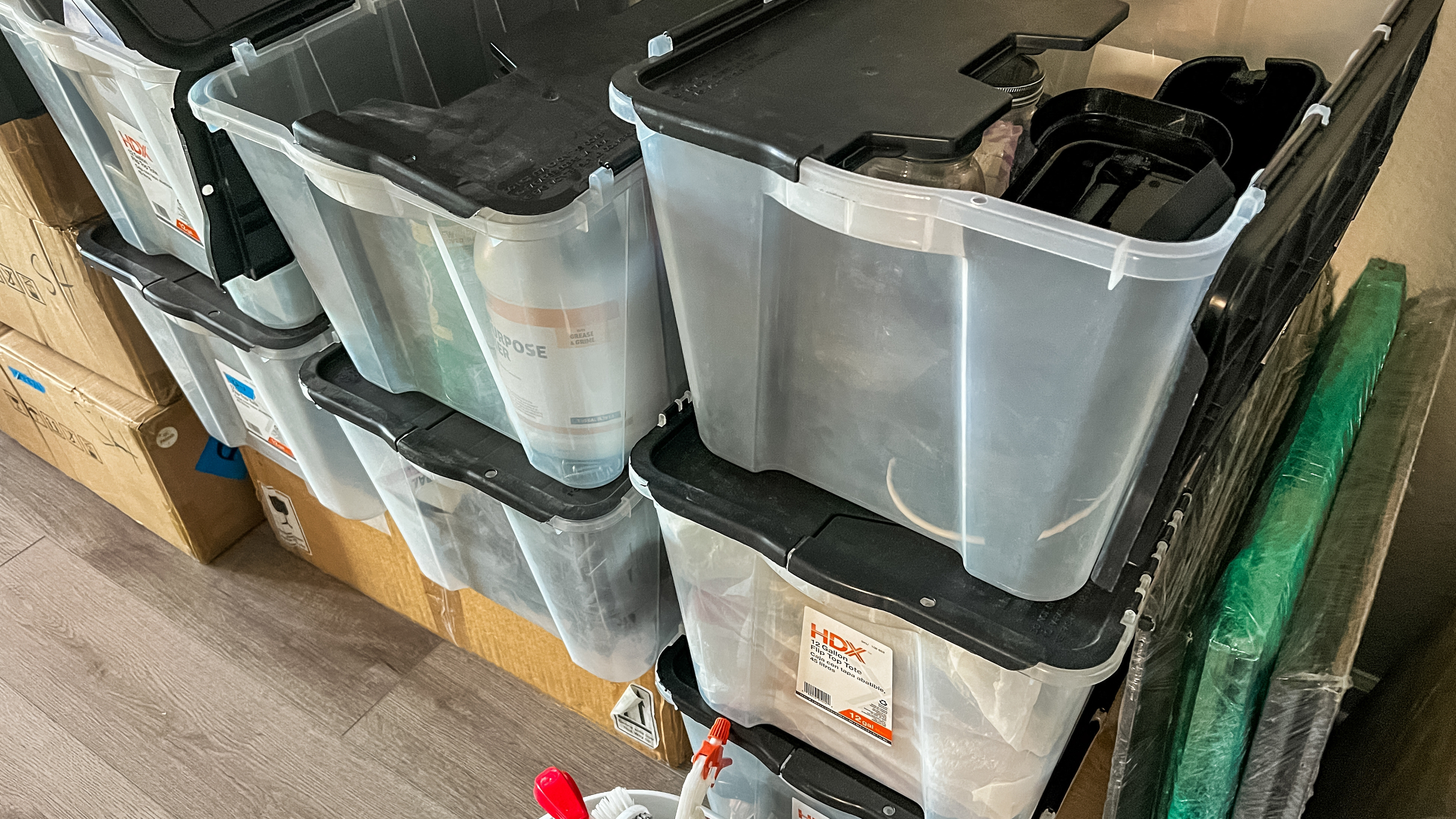
The bins of my mother’s clothes sat in my garage for nine months. I walked past them every day as I parked my car and went into the house. Hi, Mom.
Twenty years earlier, my mom died by suicide at forty-nine. I wanted to donate almost everything. My sisters picked what they wanted, and I chose the things that were most meaningful to me. The blue plastic trash can that had been our throw-up bin since childhood, the green pitcher we used to make Kool-Aid, and a crystal box Mom had on her dresser for as long as I could remember. I thought someone at Goodwill might appreciate her clothes. Her things were always well-kept and clean. I didn’t know how grateful I’d be one day that her clothes had been saved. That time would ripen my grief into something I was ready for.
I was twenty-nine and pregnant with my first child when she died. Mere moments after hearing the news, I was told to “pull it together” because others were having a hard time. And everyone was afraid I was going to lose the baby. I needed to protect my son and my sanity and so I numbed myself and focused on the tasks at hand. Grief felt dangerous. Anger and administration seemed more acceptable. I kept my hands protectively over my stomach wishing to feel him kick, imagining that it would somehow be a message from my mom letting me know she was watching over him.
During the twenty years the bins sat in a basement, I mostly forgot about them. Time passed. I hardened, then softened. In the early days, I was so full of anger and disbelief that a mother could abandon her children like she had. But over time I was able to see her as a full person all her own, who’d been suffering most of her life. Her three daughters were not ready to lose their imperfect mother. We were all in our twenties and well into adulthood, though still much too young to lose her.
I think many of us do this. Hide the hard thing away, in the basement, or in the garage, not because we don’t love the person, but because we’re not sure we can survive coming into such close contact with their absence. Deferred grief convinces us it has been growing stronger over time, that we’ll be ambushed by the full weight of everything we didn’t let ourselves feel. Sometimes that’s true. And sometimes the grief has been waiting quietly, not to undo you, but to bring the person back to you.
Eventually, when I was ready, over a decade later, meeting my grief was slow and painful. I allowed it in fits and starts. The small moments when I could notice her in my laugh felt okay. But then reading the opening passages of Motherless Daughters led to months of freezing up again. I could handle looking at pictures, but journaling about how I felt was too much. My anger slowly
dissolved and I began to long for her. My grief had softened enough that I wanted to feel her again, not avoid her.
The bins came to my garage when I was forty-nine and counting down the days until I would be fifty, an age my mother never was. In a way the bins kept me company. It felt like my mom was there with me during those impossible months as I lived with the strange and tender ache of outliving her. Having the bins as part of my everyday life reacclimated me to being in a relationship with her and not just the absence of her. I might touch the lid of a bin as I walked to my car or not look at them on a day when I was feeling sad.
Turning fifty was already going to be emotional for me, and I didn’t want to spend that day going through her clothes. But I did want the day to feel special. I decided to wait until the fall on what would have been her seventieth birthday. I planned to go through them to sort out the ones that could be made into eight blankets. One for each of her daughters and her five grandchildren.
As her birthday approached, I became anxious. I was afraid that seeing her clothes, feeling them, smelling her, would hurt in ways that I hadn’t allowed it to before. During this time, I came across Anderson Cooper’s grief podcast, All There Is. I was stunned when the first episode was all about him going through his mom’s things years after she’d died. What a miracle to be companioned in this way. If he could face an entire apartment of his mother’s things, including things she had saved from his father and brother, I could surely face six bins. As the months passed, I was comforted by Anderson’s tenderness and honesty, and by being in a community with other grievers as I listened to each episode. Listening to him helped me believe that going through the bins wouldn’t be quite as bad as I feared it might be. Witnessing some of his process became emotional preparation for mine.
On my mom’s seventieth birthday, I brought a gray folding chair into the garage. I wondered if she’d sat on it on one of the Thanksgivings I’d hosted before she died. But what I really wondered was how badly it would hurt to see her clothes. Would I wail like a wounded animal? Would it physically cause me pain? This is what I’d been afraid of for the last nine months.
I opened the first of the bins. I pulled out a short-sleeve cotton empire dress. It was heather beige with rose, plum, and blue flowers. I brought it to my face and closed my eyes. I inhaled. I’d expected to be overwhelmed with an absolute knowing that it smelled like her, but that’s not what happened. She didn’t wear any specific perfume. Her smell was more like whatever shampoo and body lotion she was wearing, but always with a familiar undertone of just her. I leaned in, reaching, reaching, reaching back through time until—yes. Hi, Mama.
Not pain. Not wailing. Just her and me.
I pulled out each piece, separating them into two piles depending on what would work well in the blankets. A blue-and-white gingham dress. A forest-green cotton dress with white leaves. A denim vest. A matching brown-and-gold velvet outfit that she’d wear on holidays. Our family had always dressed up a bit for those dinners. A pink floral cotton dress. A denim vest. Each one came with a memory, mostly from my teen years. Black gingham with red flowers. Mint-green floral polyester shirt. I set aside a blue chenille knit sweater for myself to wear. And a velvet scarf to hang across the corner of my ancestor board. When I pulled out a third denim vest I laughed and asked her, “why so many denim vests, Mom?”
I went through the rest of the bins. Smelling each outfit. Remembering her wearing almost all of them. Remembering how well-dressed she always was. How clean our home always was despite having little means. And while her parenting was imperfect, and I have plenty of trauma to remember, what I’m left with is just love, and sadness over all that she’s missed. But grief didn’t break me the way I had feared. I could hold her and our relationship now at fifty in a way I couldn’t at twenty-nine. Grief was something I could carry now. More like a blanket around my shoulders than one over my face.
The eight memory blankets have been made. Mine is often draped across my lap as I work and also when I rest. Sometimes I reach for the cream flannel backing or the soft edging, absentmindedly rubbing it between my fingers. I can still smell her in it.