By Lucinda Cummings
I arrive early for my annual mammogram, check in at the clinic desk, and take note of a fiftyish man alone in the waiting area with a book in his lap. The bubbly, silver-haired hospital volunteer leads me to a changing room, where she hands me a white waffle-textured robe and instructs me to undress from the waist up. In silence, I change into the robe, lock my belongings inside the small white closet, and slip the slinky-style orange key ring onto my wrist. It’s all routine and nothing to worry about after a lifetime of normal mammograms and no suspicious genes lurking in my family history.
I take a seat in the Robed Waiting Room, glancing at the other women in white who study their phones and wait for the mammographer to call their names. I’m absorbed in my book when a young woman seats herself across from me. She’s in her late twenties, wearing jeans, a black sweater, and black knee-high leather boots I can’t help but admire. Her dark hair is cut short in a stylish way that frames her unlined face. She settles in with her phone and coffee, and I wonder how she’s come to be here, fully clothed in the low light of this soundless room of half-dressed women. A technician calls my name.
When my mammogram is completed, I emerge from the dark exam room into the brightly lit hallway, just as the woman in boots walks by. Her arm is tightly wrapped around the shoulders of a robed and sobbing younger woman: slight, early twenties, hand trembling as she lifts a tissue toward her flushed face. They share a family resemblance. Trailing them, I overhear Big Sister speaking reassuringly to Little Sister: “Let’s go find Dad.”
Alone in my dressing room, I change quickly, staring into the mirror as a feeling of recognition overtakes my chilled body. I know this moment. This is the moment when a life separates into Before and After, when imagined futures diverge forever from the new realities that will replace them.
Little Sister traverses this divide involuntarily, reminding me of the dark chasm I was wrenched across when my elder son died suddenly fourteen years ago—the day I awoke expecting a holiday spent at the movies with my husband and two sons and a family dinner where my boys would crack jokes and rehash the movie. A day that ended with three of us clinging to one another in bed, bodies ringing with trauma, unable to sleep, facing the impossibility of burying our twenty-three-year-old son. Crossing irrevocably from one life into another, in no time at all.
I know this moment will inhabit Little Sister, its sensory impressions sealed inside her body’s memory, the radiologist’s sudden verdict an earthquake in her life. My chest aches for her. My arms hang useless at my sides.
I exit through the waiting area, where Dad stands wiping away tears, then yawning and stretching his arms wide, as though he could awaken from this nightmare.
Ducking into the restroom outside the clinic, I hide inside an empty stall, thinking I’m alone here as my throat closes around suppressed tears. I reach for a tissue.
“Rat-tat-tat!” A brisk, urgent knock on the door of my stall. I open it to find Little Sister, fully dressed, agitated. Taking in her crumpled face and red eyes, I watch as she wrings her small hands in front of her jacket, as though they no longer have purpose. Where is her mother? My arms long to enfold her in a warm hug.
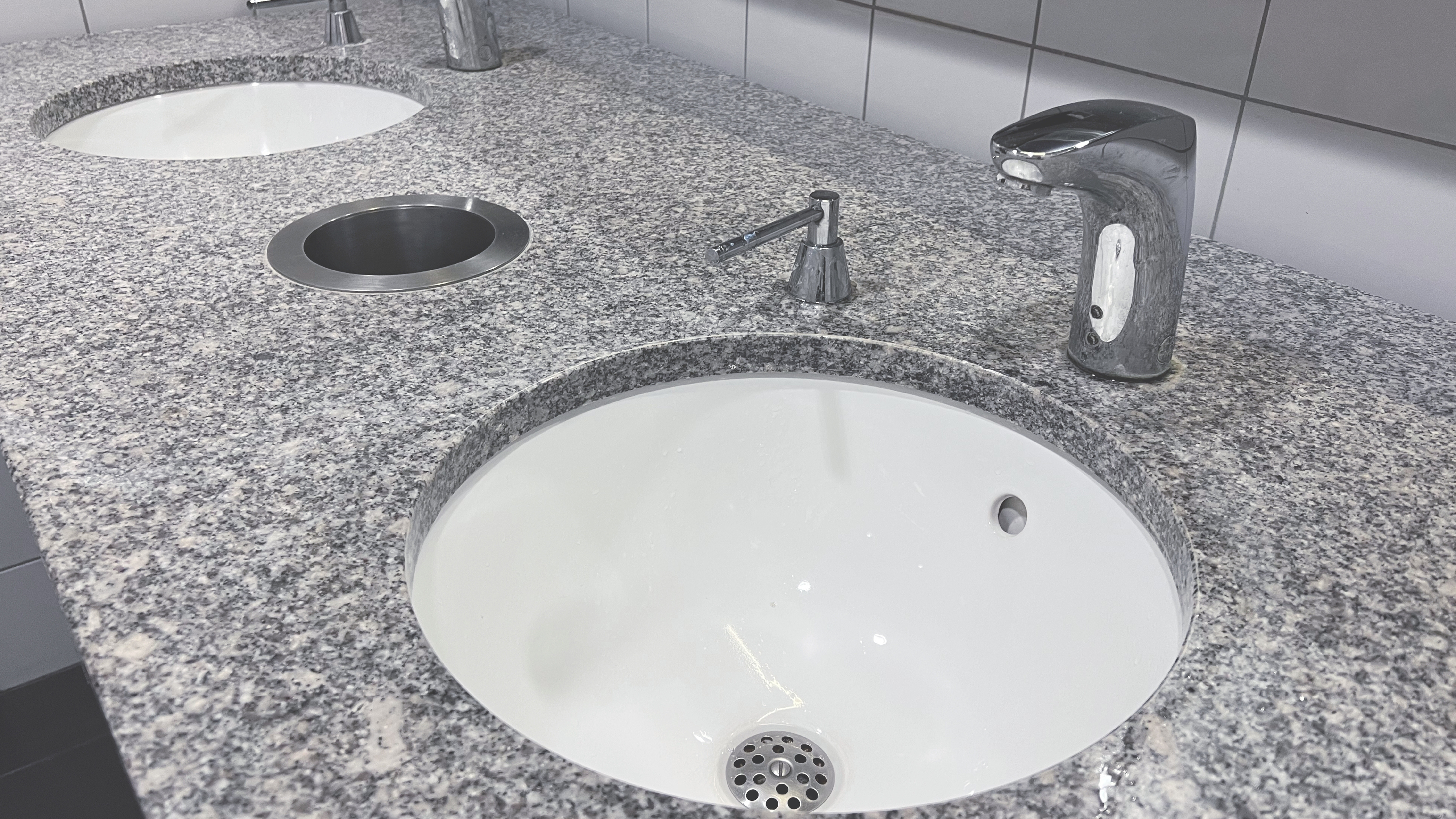
Instead, I hustle out of her path and toward the sink, as she bangs her stall door closed. When I touch the soap dispenser, it emits a loud, mechanical noise, releasing its liquid. I rinse my hands, tears overflowing onto my cheeks. The dispenser sounds again, squirting soap into a pool of wasted liquid on the counter below.
I rush to dry my shaking hands, mindful of Little Sister’s privacy, leaving the restroom with the dispenser echoing in my wake. I carry Little Sister with me.
I sense the unearned privilege of going on with my unremarkable day, while the trajectory of her life shifts. Before—After. I recall my incredulity, something like outrage, that occupied my body when the world did not stop for the death of my child, when ordinary life cruelly continued in his absence: mothers embracing sons in the grocery store, families who knew nothing of empty chairs at holiday tables, graduations and weddings untouched by tragedy.
I say a silent prayer for Little Sister, for her healing, telling her I beheld her suffering, that she’s left a tiny shard lodged inside my broken heart. Bearing witness feels insignificant in the face of her pain. But, so often, it’s all I have to offer in this fractured life.